
A Modern Healthcare Website Is Not a Brochure:
Why UX Matters for Patients and HCPs
Healthcare websites carry a heavier responsibility than most. They influence health decisions, shape trust in organisations, and often sit on the critical path between a question and a real-world action, such as booking an appointment, starting treatment, or seeking urgent care. When a site feels dated, confusing, slow, or inaccessible, the cost is not just lost leads. It can mean missed appointments, unnecessary calls to stretched teams, avoidable anxiety, and lower adherence to care plans.
A well designed website with excellent user experience (UX) is therefore a clinical, operational, and commercial asset. It needs to work for two audiences with different contexts: patients and the public, and healthcare professionals (HCPs). Getting both right usually means designing two distinct journeys within one brand system.
What “excellent UX” means in healthcare
In healthcare, good UX is less about novelty and more about clarity, safety, and confidence. Users should quickly understand where they are, what they can do, and what will happen next. The basics matter: fast performance, mobile friendliness, clear navigation, readable typography, consistent language, and accessibility. Beyond the basics, healthcare UX must reduce cognitive load. People on patient sites might be worried or searching late at night. HCPs might be between clinics and need an answer in seconds.
Modern UX is measurable. You can track task completion, form abandonment, search queries, and the steps that cause friction. In healthcare, meaningful actions might be booking, registering, downloading a guide, requesting a call, completing CPD, or locating prescribing information.


Patient facing websites: what they require from a UX point of view
Patient experiences should start with empathy. The design should reassure and guide, not overwhelm. These sites often serve a broad demographic range, including older users, people with low digital confidence, and users with accessibility needs. Key UX requirements include:
Clear information architecture for common tasks
Patients typically want simple answers fast: “What is this condition?”, “What should I do next?”, “Where can I get help?”, “How do I access this service?”. Navigation should prioritise these intents using plain language and progressive disclosure. Avoid dumping long medical text on a single page. Use clear sections, short summaries, and expandable detail.
Plain language and content design
Health literacy varies widely. Use everyday wording, explain clinical terms, and keep sentences short. Content design should use headings that read like questions and bullet points for steps. Where appropriate, include clear signposting to urgent care.
Accessibility and inclusivity
Healthcare sites should aim to exceed minimum accessibility compliance. This includes strong colour contrast, keyboard navigation, readable font sizes, descriptive link text, and support for screen readers.
Trust signals and reassurance
Patients look for credibility cues: clear ownership, clinical review dates, transparent contact options, and understandable privacy notices. If you use forms or tools, explain how data is handled and what the follow-up process looks like.
Low friction actions
Patient journeys should make it easy to book, call, locate a clinic, or access resources. Forms should be short and forgiving, with clear error states and the option to save progress where relevant. Many users will start on mobile, so mobile-first design is non-negotiable.
Supportive self service
Healthcare websites can reduce pressure on front desks by providing strong self service: appointment FAQs, eligibility guidance, refill information, and downloadable materials. The UX goal is to resolve the need without forcing a phone call, while still offering a human route when needed.
HCP facing websites: what they require from a UX point of view
HCP audiences have different expectations. They are time poor, information dense, and often need content that is regulated, technical, and precise. A strong HCP experience respects their workflow and removes ambiguity. Key UX requirements include:
Fast access to specific, deep content
HCPs commonly look for dosing, indications, contraindications, interactions, clinical data, guidelines, SmPCs, reimbursement information, and education materials. The UX should prioritise search, filtering, and scannable layouts. Consider “quick access” panels for the most requested assets.
Clear segmentation and gating where necessary
Some content may need to be restricted to verified professionals. If verification is required, keep it as light as regulation permits. Make the value clear, offer quick verification, and remember returning users.
Evidence-first presentation
Clinical information should be structured like an HCP thinks: study design, endpoints, outcomes, limitations, and links to source materials. Use tables, downloadable PDFs where required, and well designed charts with accessible alternatives.
Professional utility and workflow support
Useful tools can include dosage calculators, referral pathways, sample requests, congress updates, and CPD modules. The UX needs careful validation, clear disclaimers, and an interface that supports accurate input.
Compliance without friction
HCP sites must balance speed with safety. That includes version control for documents, clear update history, and required safety information placed consistently.

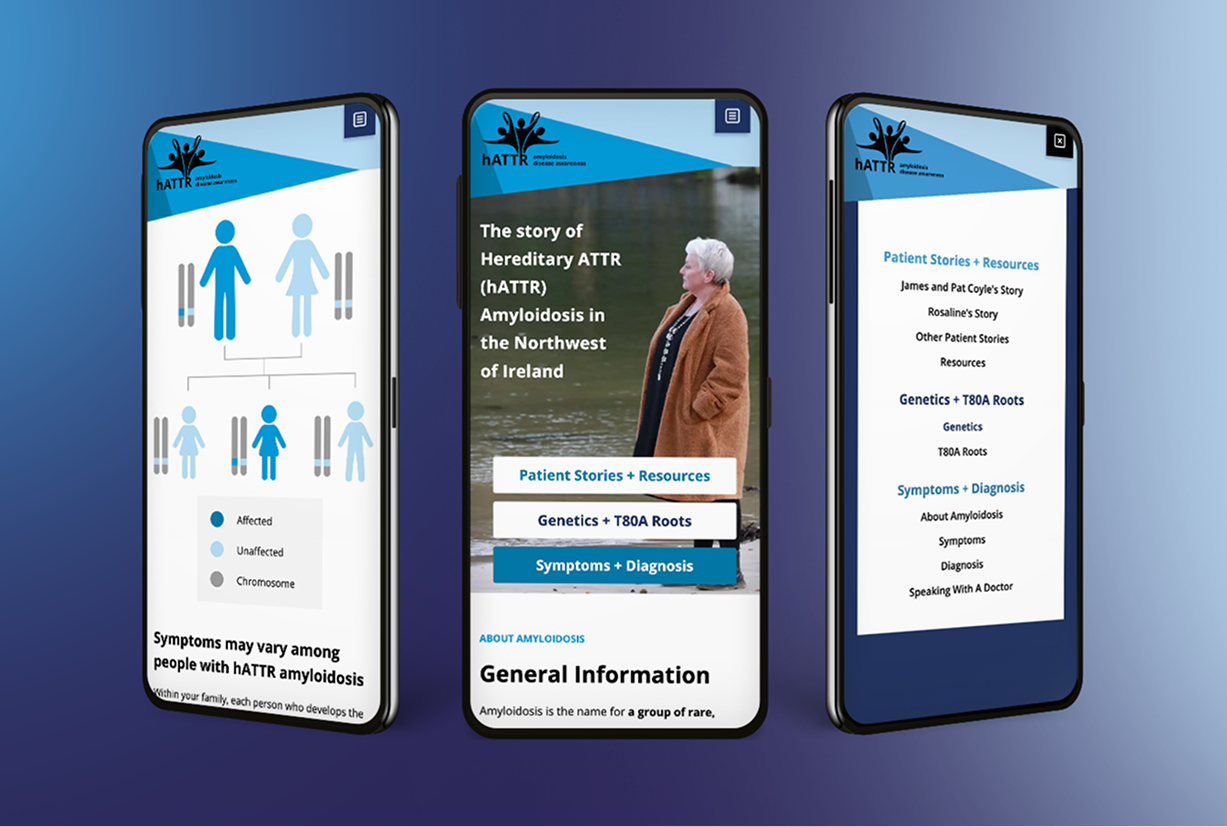
The differences in practice: one brand, two mindsets
Patient UX prioritises reassurance, simplicity, and guided journeys. HCP UX prioritises speed, precision, and depth. Patients benefit from supportive navigation and decision guidance. HCPs benefit from powerful search, structured evidence, and tools that save time. Many organisations try to serve both audiences with the same pages and end up serving neither. A better approach is a shared design system with distinct entry points, language, and templates for each audience.
Technologies that enable a strong UX
Good UX is not only a design problem. It is a build, performance, and measurement problem too. The right technology choices can make a healthcare website faster, more secure, easier to manage, and easier to improve.
Frontend development: React and Gatsby
React is widely used for building responsive, component-based interfaces. For healthcare websites, this can mean consistent UI patterns, reusable components for forms and content modules, and smoother interactions, particularly when building portals, calculators, or gated HCP areas.
Gatsby, which is often used with React, can support strong performance by generating pages efficiently and optimising assets. Fast load times reduce drop-off, especially on mobile or in low bandwidth settings. Gatsby can also support content-rich sites with strong SEO foundations, while still allowing modern interactions where needed.
Agency X has deep expertise in modern frontend builds using React and Gatsby, helping healthcare teams deliver fast, polished experiences that are easy to evolve.
Backend and infrastructure: Sanity and Netlify
Sanity is a headless content management system (CMS) that helps teams structure content, reuse modules, and manage governance. Structured content is valuable in healthcare because it supports consistency across patient and HCP templates, makes updates safer, and can help enforce required fields, review dates, and approval workflows.
Netlify is a common hosting and deployment platform for modern web projects. It supports fast global delivery, secure build pipelines, and easy rollbacks, which matter when content changes need to be reliable. Strong infrastructure also improves stability, uptime, and resilience.
Agency X is highly experienced with Sanity and Netlify, setting up secure, resilient platforms that keep content teams moving quickly without sacrificing control
Business tools and integrations: analytics and beyond
To improve UX, you need evidence. Tools like Google Analytics help you understand where users drop off, what content they engage with, and which channels drive high-intent visits. Pair analytics with event tracking that maps to real tasks, such as “booked appointment”, “downloaded guide”, or “completed verification”.
Healthcare sites also need consent and privacy management, particularly where tracking is involved. Integrations with CRM systems, marketing automation, appointment booking platforms, and secure form handling can streamline journeys and reduce manual work. The principle is to integrate only what helps the user complete a task, and to review scripts regularly so they do not slow the site or introduce risk.
Our dev team at Agency X can also implement the right measurement and integrations, connecting analytics, consent, CRM and booking tools so the site performs as a joined-up system.
Why SEO is part of UX in healthcare
Search engine optimisation is often treated as a marketing layer, but in healthcare it is also a user experience layer. Many journeys start with search. If your content is not discoverable, users may end up on less reliable sources. Good SEO helps people find the right information fast, and it encourages you to structure content in a user-friendly way.
Strong healthcare SEO includes:
Search intent matched content
Create pages that answer real questions patients and HCPs ask. Use the language they use, not internal terminology. Build clear topic hubs for conditions, services, and professional resources.
Technical SEO and performance
Fast pages, clean URLs, logical internal linking, and mobile-first design support visibility and usability. Many technical SEO improvements are also UX improvements.
Trust through governance
Demonstrate expertise and trust with clear authorship or clinical review, update dates, reputable references where appropriate, and transparent organisational information.
Local SEO for patient services
If you provide care in specific locations, local optimisation helps users find the right clinic quickly. Accurate location pages, opening hours, and contact details reduce frustration.
Making UX a continuous improvement cycle
The best healthcare websites are never “finished”. They evolve based on user needs, clinical governance, and data. Treat UX as a cycle: research, design, build, measure, improve. Run regular usability testing with both patients and HCPs, review analytics monthly, and maintain a backlog of optimisations.
A well designed healthcare website with excellent UX is a strategic advantage. For patients, it reduces anxiety and guides them to the right care. For HCPs, it saves time and supports confident decision-making. With the right technologies, thoughtful integrations, and a strong SEO foundation, you can deliver experiences that feel trustworthy, consistently fast, and genuinely helpful.
Agency X’s expert dev team builds fast, secure, modern healthcare and pharma websites that feel refreshed, perform brilliantly, and turn visits into action. Learn more at https://www.agencyx.ie/services/web-development/ or contact us at hello@agencyx.ie
Contact us today to discuss how we can collaborate to design and create your next brand campaign.We'll be delighted to help!