AI Can Spark Great Design
but Human Finesse Makes It Work
Artificial intelligence has already changed the early stages of creative work. It can generate prompts, surface references, suggest routes, organise inspiration, draft rough ideas and help teams move from a blank page to a first direction much faster than traditional methods alone. That speed has value. In branding and design, momentum matters, and AI can be excellent at creating the initial spark.
But a spark is not the same as a finished idea.
In sectors where trust, clarity and reputation matter, strong design is never simply about producing more options at speed. It is about producing the right solution. It is about balancing creativity with usefulness, originality with clarity, and expression with restraint. It is about taking a raw idea and shaping it into something that feels right for the audience, right for the brand and right for the context.
That is where human finesse still matters most.
Creative and design should never be treated as surface decoration. Done properly, it is strategic. It shapes how a brand is understood, how a message is received and how an experience feels across every touchpoint. The strongest creative work connects visual identity, verbal expression, digital journeys, content systems and real-world usability into something coherent, distinctive and effective. That is particularly true in sectors where communications must do more than look good. They must also build trust, support understanding and stand up to scrutiny.

Why AI is useful in the design process
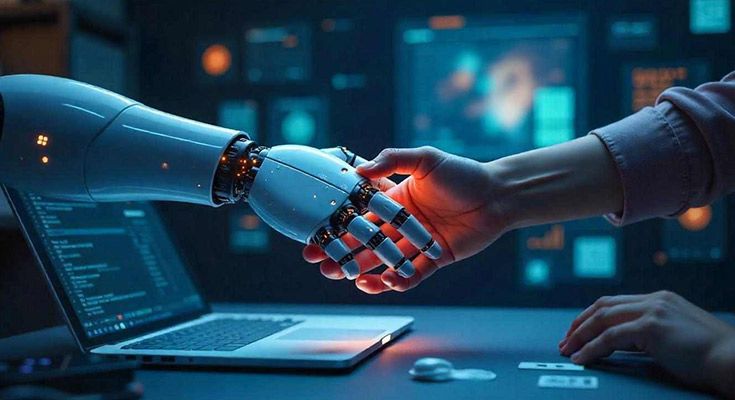
The most sensible conversation about AI in design is not defensive. It is practical. AI is useful, and in the right hands it can remove friction from the beginning of a project.
For example, in the earliest exploratory phase, AI can help generate visual territories, naming directions, tonal routes, mood references and conceptual prompts. It can offer alternatives that push thinking in fresh directions rather than towards the first obvious answer. That can be helpful when teams are trying to break past familiar category clichés or move beyond the first safe idea. The point is not that AI provides the answer. The point is that it can widen the field of view.
It can also help during research-heavy stages. A strong design process usually starts before anyone sketches a logo, builds a wireframe or writes a line of copy. It starts with understanding the market, the audience, the competition, the emotional landscape and the strategic opportunity. AI can help sort information, cluster patterns, summarise findings and accelerate desk research. It can make it easier to get to the interesting questions more quickly.
It can support content planning too. Whether the task is shaping a campaign thought, testing message angles or adapting a single core idea across multiple channels, AI can be useful as a first-pass assistant. It can suggest structures, draft rough routes and provide starting points that a creative team can then interrogate and improve. This can be especially useful when content needs to work across digital, print, email, social and presentation formats.
AI can also assist in UI and UX workflows. It can help outline wireframes, suggest page structures, organise information hierarchies and speed up early-stage journey mapping. In digital projects, that means teams can get into discussion and refinement more quickly. Used well, AI helps creative teams move faster through the earliest stages so they can spend more time where it matters.
So yes, AI can absolutely help spark the design process. It can reduce blank-page paralysis. It can speed up rough thinking. It can give teams more material to react to. That is genuine value.
Where AI reaches its limits
The problem begins when speed is confused with judgement.
Design is not just the generation of ideas. It is the selection, refinement and pressure-testing of ideas. It is not enough to create ten options quickly if none of them are strategically right, emotionally resonant or practically workable. AI can generate patterns because it has seen patterns. But design excellence requires more than pattern recognition. It requires taste, context, interpretation and the ability to understand not just what a brand could say, but what it should say.
A machine can generate a logo. It cannot independently decide whether that logo captures a brand’s real personality, whether it has enough distinction to stand apart, whether it will still feel credible in three years, or whether it will work consistently across print, web, signage, packaging and presentation decks. Those judgements are not mechanical. They are strategic and emotional at the same time.
The same is true of messaging and campaign concepts. AI can produce lines, headlines and directions, but it does not truly understand audience sensitivity, category nuance or the balance between creativity and appropriateness. It does not know when a concept feels overworked, when a message sounds hollow, or when something technically correct still feels emotionally wrong. Skilled human creatives do know that, because they understand tone, timing, context and audience behaviour at a deeper level.
Why this matters even more in Irish healthcare and pharmaceutical marketing
This becomes even more important in healthcare and pharmaceutical communications in Ireland, where the rules are strict and the nuances matter.
Advertising of human medicines in Ireland is regulated by the HPRA under the Medicinal Products (Control of Advertising) Regulations 2007. The HPRA states that medicine advertising must be accurate, not misleading and in line with the approved product information, and it actively reviews advertising across media including print, broadcast, social media and other channels. Prescription-only medicines cannot be advertised to the public in Ireland.
Alongside this legal framework, the IPHA Code of Practice for the Pharmaceutical Industry also plays a major role in shaping how pharmaceutical communications are developed in Ireland. The current IPHA Code, version 8.6, took effect on 1 June 2025, and the Minister for Health endorses those parts of the Code that are directly derived from the Regulations.
That matters because creative work in this space does not sit in a free-form environment. There are boundaries around what can be said, who it can be said to, how claims are presented, how information is balanced, and what counts as promotion. Even where AI can generate something polished on the surface, it may not understand the legal and ethical subtleties underneath. It may not recognise when wording drifts too close to promotion, when an image implies more than the approved claims allow, when a call to action is inappropriate for a public audience, or when the tone of a campaign risks undermining trust in a sensitive healthcare context. That gap between appearance and appropriateness is exactly why human expertise is so important.
In Irish healthcare and pharmaceutical marketing, nuance is everything. A small wording change can alter compliance. A visual cue can shift the implied meaning of a message. A campaign that feels engaging in a general consumer context may be entirely unsuitable when applied to medicines, healthcare professionals or patient communications. AI can miss those distinctions because it does not truly understand the responsibility carried by regulated communications. It can mimic style, but it cannot reliably own judgement.

The difference between generating and designing
This is the distinction that matters most.
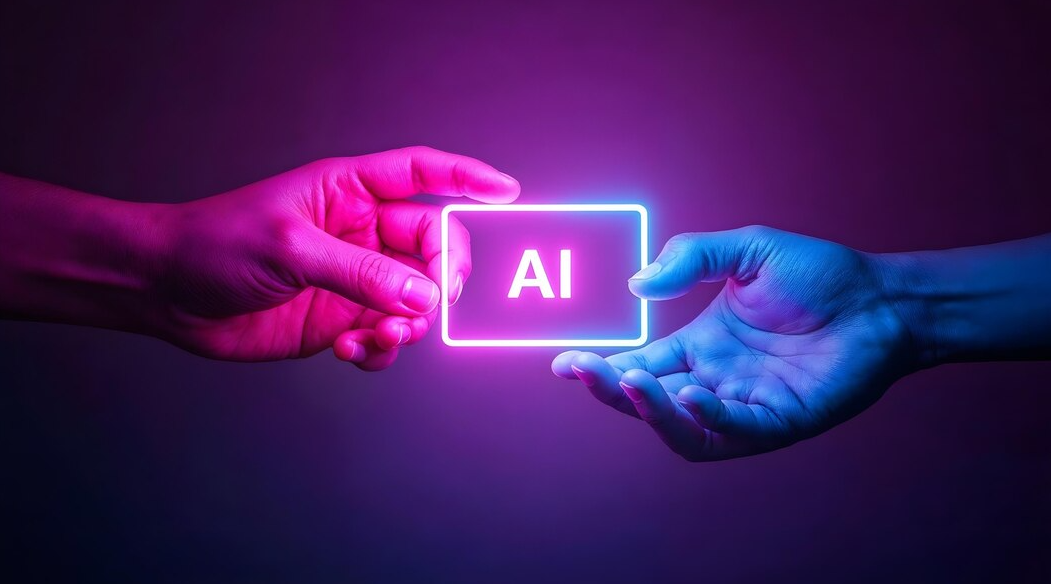
AI generates. Designers design.
Generation is about creating possibilities. Design is about making meaningful choices.
A strong design process is rarely neat or linear. It involves questioning, editing, refining, rejecting, simplifying and reworking. It involves asking difficult things of a concept. Is it memorable? Is it credible? Is it clear? Is it distinctive? Does it feel true to the brand? Will it work for the audience it is meant to serve? Does it still hold together when translated across different formats and channels?
AI can offer raw material, but it cannot replace the craft of shaping that material into a coherent outcome.
That craft appears in subtle but crucial ways. It is there in the refinement of typography until the tone feels exactly right. It is there in the spacing of a layout until the content breathes naturally. It is there in the discipline to strip away visual clutter rather than adding more. It is there in the decision to hold back from an over-clever concept because clarity matters more. It is there in the ability to make work feel polished without making it feel generic.
This is especially visible in areas like packaging and digital design. Packaging has to work in the real world, not just as a good-looking mock-up. Digital interfaces have to guide users, not just impress them. A visually attractive concept that ignores usability, accessibility, clarity or regulation is not good design. Human expertise is what turns a promising idea into something workable, effective and trustworthy.
How AI should be used intelligently
The most productive model is not AI versus humans. It is AI in service of human creativity.
Used properly, AI can speed up lower-value tasks and create more room for higher-value thinking. It can help teams gather references more quickly, sketch early possibilities, cluster research, draft rough messaging routes, test structural options and accelerate internal workshops. It can support iteration, reduce repetition and free up time for the deeper strategic and creative work that really matters.
But it still needs direction.
That direction starts with humans defining the brief properly. It continues with human strategists setting objectives and identifying the real problem to solve. Human creatives decide which territories are worth pursuing. Human designers finesse typography, composition, hierarchy, pacing and brand coherence. Human writers shape voice, tone and clarity. Human UX specialists test whether something is truly intuitive and accessible. Human reviewers make sure the work is right not only aesthetically, but commercially, emotionally and operationally.
This is the real opportunity AI presents. Not the removal of creative expertise, but the better use of it.
When repetitive or time-heavy early tasks are reduced, the creative team has more space for the parts of the process that matter most: sharper concepts, deeper audience thinking, stronger refinement and more considered execution. That is where quality lives.
Why the finish matters more than ever
The easier it becomes to generate volume, the more valuable refinement becomes.
That final stage of a project is often where the strongest creative work separates itself from the merely competent. It is the careful trimming of language until it sounds effortless. It is the adjustment of a design system until every element feels consistent. It is the tightening of a brand expression until it feels both distinctive and natural. It is the sensitivity to know when to push an idea further and when to stop.
AI does not finesse. People do.
And for brands that care about credibility, quality and long-term value, finesse is not optional. It is the difference between output and excellence.
The future is hybrid, but the leadership stays human
The future of design is not about rejecting AI. It is about refusing shortcuts.
AI is a powerful tool for idea generation, acceleration and support. It can help kick-start projects, broaden exploration and bring speed to early-stage creative work. But the more important the project, the more it needs human oversight, human judgement and human craft, especially in sectors like healthcare and pharma where regulatory nuance can shape everything from language and imagery to audience targeting and claims. The best creative outcomes will come from a hybrid approach: AI for momentum, people for meaning.
For organisations looking to use AI intelligently in branding, packaging, content, multimedia and digital experience design, the real value lies in knowing where the technology helps and where human finesse has to take over. That is where Agency X can help, through creative and design services spanning branding and identity, packaging, content and creative development, multimedia production, and UI and UX, using AI where it adds value while ensuring the final work is shaped by strategic thinking, compliance awareness and human craft.
Contact us today to discuss how we can collaborate to design and create your next brand campaign.We'll be delighted to help!