Design That Delivers:
A Guide to Smarter Healthcare Packaging
Packaging is the first touchpoint patients, carers, pharmacists and clinicians have with a healthcare product. It signals trust, communicates safety, and guides correct use long after purchase. In crowded OTC shelves and highly regulated prescription environments, great design is not decoration. It is a practical system that aligns brand purpose with clinical accuracy, retail realities and patient needs.
Design & Structure
Effective healthcare packs begin with a clear problem statement. Is the priority fast shelf recognition in a busy pharmacy, calm reassurance at the bedside, or clear instructions for a complex regimen at home. Structural and graphic choices should follow that strategy.
Shelf impact earns attention in seconds. Confident colour hierarchies, strong brand marks and forms that block well help staff and shoppers navigate quickly. Typography must prioritise legibility at distance, then close up. Optical sizing, sensible line length and high contrast are essential. Iconography can speed understanding for dosage, indications and warnings when symbols are consistent and tested.
Unboxing experience must support function. Perforations, tear strips and opening cues should align with tamper evidence and child resistance where required. Inside the pack, trays and inserts can guide sequence of use and protect components. In hospital or practice settings, easy reclose and robust stacking reduce waste and time pressure. At home, touches such as index tabs, day markers and tactile cues support adherence and reduce errors.
Ergonomics brings usability to life. Shapes that fit the hand, closures that open without excessive force, and surfaces with sufficient grip help users across age and ability. Simple measures matter, such as larger pinch areas on caps or a bevel that stops tubes rolling off counters. In the EU, braille on outer cartons for prescription medicines assists visually impaired users, so structural choices must allow emboss depth without compromising print quality.
Sustainability is now a baseline expectation. Material selection should balance protection, regulatory constraints and recyclability. Mono material designs, reduced varnish coverage and elimination of unnecessary laminates improve recovery rates. Right sizing cuts cost and carbon while improving on shelf density. For cold chain or moisture sensitive products, sustainable options can still be found by optimising insulation and specifying responsibly sourced fibres. Claims around sustainability should be substantiated and aligned with local guidance.
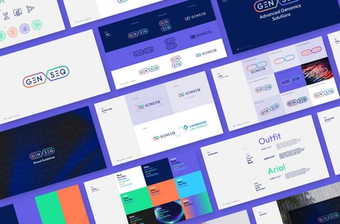
Brand consistency across formats builds recognition and trust. A single design system needs to scale from blister wallets and bottles to shippers and starter kits. Define colour roles, dose bands, information hierarchy and illustration style, then support them with layout rules for small and large canvases. Consistency should extend to digital touchpoints printed inside packs via QR codes, where users can access videos, PI leaflets or device training.
Early prototyping reduces risk. Quick white card models reveal tolerance issues long before print. Physical shelf tests and line trials expose glare, colour shifts and stacking problems that are easy to fix at design stage and costly to correct after tooling.

Dielines
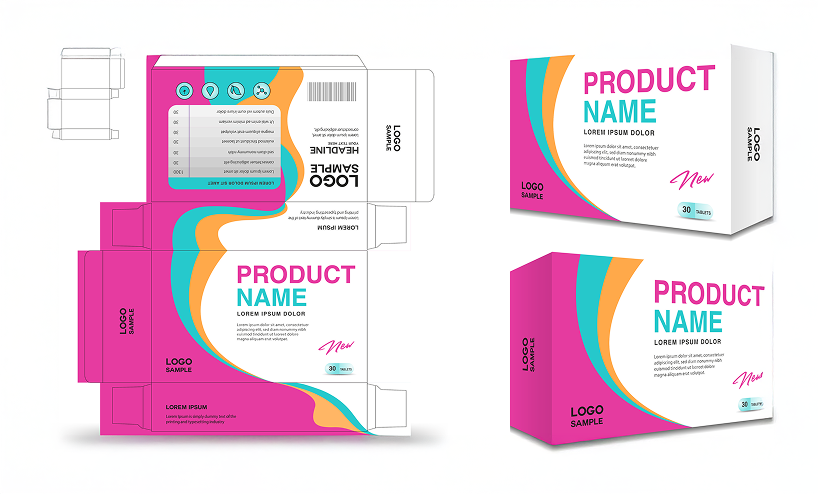
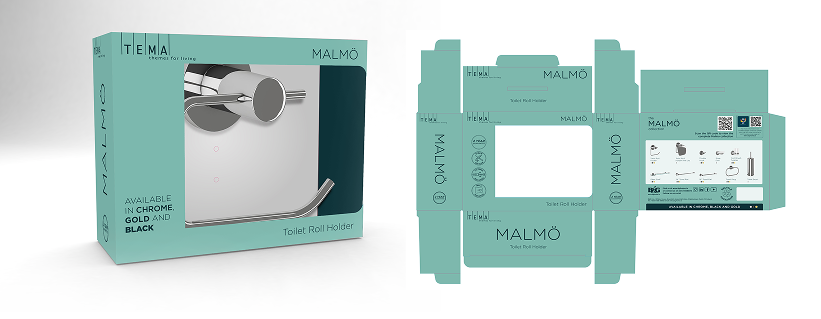
Precision dielines are the foundation of functional packaging. A resolved cutter guide makes the difference between smooth production and avoidable rework. Technical accuracy begins with the substrate. Caliper, grain direction and coating influence fold mechanics and panel spring back. Glue flaps must suit the adhesive and machine used. Knockouts for tamper seals, hang tabs and dispensers need clearance around artwork to avoid scuffing and misreads at retail.
Bleed areas and safety margins protect key information from cutter drift and printer movement. Healthcare packs with dense data benefit from conservative safety zones, especially around dosage, contraindications and batch information. Nesting efficiency on the sheet reduces waste and unit cost. Smart rotations can often deliver an extra out without compromising fibre direction or varnish laydown.
Multi part kits demand a systems mindset. Folding cartons, sleeves, labels, blisters and leaflets should be designed together. Shared alignment points allow faster set up on the line and reduce cumulative tolerance errors. Serialisation windows, 2D matrix codes and braille blocks require planned dead zones in artwork and dielines to print cleanly and pass verification.
Before release, a dieline should be tested digitally and physically. Soft proof overlays check panel logic, while CAD cut samples validate fit on production substrates. Robust naming and version control prevent orphaned files slipping into later stages. The handoff should include the cutter guide, panel annotations, fold order and essential machine notes.
Preprint & Print Production
The gap between an approved visual and a printed pack is where many projects stumble. A disciplined prepress process keeps intent and output aligned. Press ready files should use correct colour spaces, with spot colours defined for brand critical hues and tolerances agreed in advance. Colour separation must consider small type and fine lines, avoiding trapping that fattens glyphs or muddies pictograms. Overprint settings should be checked against varnish layers and foil plates so the finishing sequence works as expected.
Mockups and proofs reduce ambiguity. Digital mockups help stakeholders visualise hierarchy and claims placement. Soft proofs catch late text edits while hard proofs on the intended substrate reveal metamerism and micro contrast that screens cannot. For large programmes, a master standard becomes the reference for regions and suppliers, locking in tone and finish.
On press, collaboration with printers is essential. Brand colours should be targeted with measurable tolerances using spectrophotometers and a shared standard such as CIELAB. Finishes like matte or gloss varnish, soft touch coatings, foil stamping and embossing can elevate perception when used purposefully. In healthcare, finishes should not impede legibility or create glare that obscures warnings. Eco friendly inks and water based coatings can often meet performance requirements while supporting sustainability goals.
Production oversight should extend to line trials and QA plans. Barcodes must scan reliably, serialisation codes must verify at speed, and leaflets must fold without creep hiding critical lines. Batch and expiry panels need sufficient contrast for overprinting and clear zones to prevent smudging. For temperature sensitive adhesives or complex gluing, in line checks and retention samples provide traceability. Clear run sheets and sign off forms reduce the chance of deviation across shifts or sites.
Supply chain resilience matters. Approved alternates for substrates and finishes protect timelines without brand drift. Artwork should accommodate minor substrate changes through smart colour management and flexible dielines. When market teams need language additions or regulatory tweaks, a modular system avoids full rework and controls cost.
Legal & Medical Compliance
Healthcare packaging lives under strict rules for good reason. Patients and professionals rely on accurate, accessible information to make safe decisions. Design must integrate those requirements from the start rather than retrofit them at the end.
For European and Irish markets, alignment with national agencies and European frameworks is essential. Prescription medicines require braille on outer cartons, unique identifiers and tamper evident features. OTC products face constraints around claims, advertising codes and mandatory statements. Supplements and cosmetics in healthcare channels must meet labelling and ingredient disclosure rules that differ by category. Multi language packs require careful hierarchy and typographic planning to avoid confusion or truncation.
Barcodes and serialisation are mission critical. GS1 standards dictate how EAN, UPC and DataMatrix codes are built and placed. Quiet zones must be respected, print contrast must meet verification thresholds, and codes must survive varnish, heat and handling. On device packs, UDI requirements bring additional structure and data that must be accurate and machine readable.
Warnings, contraindications, dosage and directions require prominent and consistent placement. Design should create a clear path through the information, typically starting with product identification and dose, then indications and warnings, followed by directions for use. Typographic choices affect comprehension and error rates. White space and contrast are safety features that support recall under time pressure.
Collaboration with legal, regulatory and medical teams should be planned. Define review gates early. Provide annotated PDFs with clause references. Track changes and rationales so that future audits can see why a decision was made. When a regulation changes, a structured asset library and version history allow rapid updates without introducing new risks.

Original Custom Made FMCG POS
Point of sale materials are the silent salesperson at shelf. In pharmacy and retail healthcare, custom POS has to work within tight spatial and compliance constraints. The goal is simple. Earn attention, frame the decision and help staff and shoppers act quickly.
Start with store realities. Countertop footprints, gondola end sizes, ceiling heights and sightlines vary widely. A family of POS units that share a visual language but adapt to different spaces will outperform a single display. Materials should balance durability with weight and cost. Corrugate and honeycomb board deliver strength while staying recyclable. For longer campaigns, metal and acrylic components can be designed for modular refresh rather than full replacement.
Assembly simplicity is essential. Pharmacy teams are busy. Units that slot together with minimal components, clear instructions and no tools will get onto the floor faster and stay there. Hidden fasteners, clear part labelling and integrated collateral holders reduce clutter. For compliance, ensure claims and visuals align with the product’s category and avoid any suggestion of diagnosis or cure where prohibited.
Visual impact should be decisive, not noisy. Lead with one message that ties to the pack and campaign. Use the brand system consistently so that a shopper who first encounters the display recognises the product instantly at shelf. Navigation cues such as colour dose bands, benefit icons and pack silhouettes help staff guide customers in line with local guidance. For cross promotion or starter kits, POS can show how components relate with simple diagrams and a clear flow from interest to action.
Logistics planning closes the loop. Flat packed units reduce shipping cost and damage. Pallet fit should be designed with regional constraints in mind. A return or reuse plan for hardware can lower environmental impact and total cost across campaigns. If a programme includes promotional packaging variants, artwork and POS should be developed together so that timelines align and the message is consistent from display to till and home use.
Measurement and Continuous Improvement
Great packaging and POS do not end at launch. Measurement turns design craft into business value. Define success metrics early. For OTC, that may include rate of sale, basket attachment, compliance with planograms and staff feedback. For prescription products, success may relate to fewer dispensing errors, improved adherence or reduced returns due to damage. In store studies and simple eye tracking can reveal whether hierarchy, colour and iconography are working as intended. Digital scans via QR codes or serialisation portals can contribute behavioural data for the next iteration.
Build a test and learn culture. Pilot in a small set of pharmacies or clinics, compare variants and refine quickly. Create a single source of truth for assets, specs and learnings so that new markets can deploy with confidence rather than reinventing from scratch.


In Conclusion
Healthcare packaging carries more responsibility than most consumer categories. It must attract, reassure and instruct, often in moments of stress. The best results come from treating structure, artwork, production and compliance as a single design problem to solve, not as disconnected tasks. Clarity beats clutter. Function simplifies life for pharmacists, clinicians and patients. Sustainability strengthens trust and often reduces cost. With disciplined design, precise dielines, rigorous prepress and respectful collaboration with regulatory partners, healthcare brands can deliver packaging and POS that look the part, perform reliably and make a measurable difference in real world use.
Contact us today to discuss how we can collaborate to design and create your next brand campaign.We'll be delighted to help!